SnapBack
Designed an app to battle phone addiction through an innovative, gamified approach—low-stakes, peer-motivated competition
Role
UX Researcher, Marketer
Timeline
Jan - May 2025

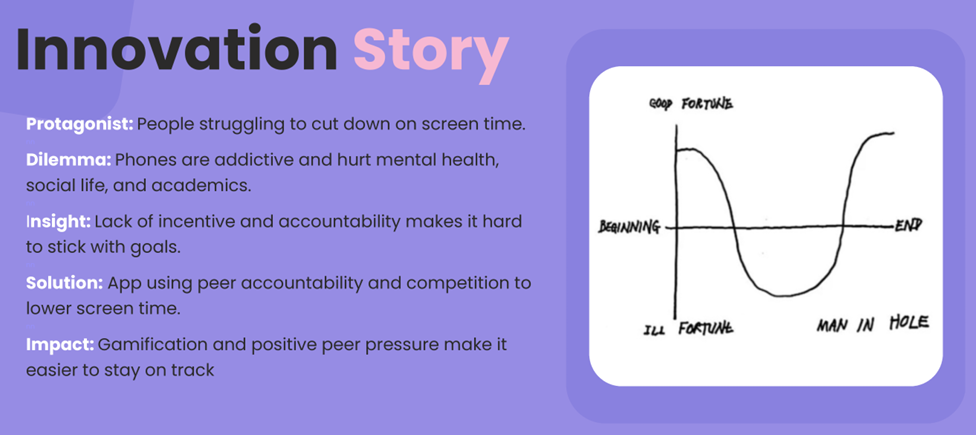
Through our research, we have found that young people struggle to balance their lives between school/work, social life, and personal/mental health. They are aware that doom-scrolling is the cause for increased stress, but people really struggle to cut down on screen time.
However, with a lack of incentive and accountability, it’s hard to stick with goals.
Our app is designed to battle phone addiction, and specifically uses peer accountability and competitive as incentives. The gamified and positive peer pressure approach is validated through our research.
Summary
Empathize
Secondary Research
Because phone addiction is considered to be under the mental health category, we decided to research partly from the psychological perspective.
College students are more connected than ever + Gen Z spend an average of 7+ hours per day on their phones
But report record-high levels of loneliness, anxiety, and social disconnection
Current digital tools often promote passive scrolling over meaningful connection
There’s a lack of intentional infrastructure helping people navigate digital habits that support the mental toll it takes
Top mental health interventions for habits and addiction are built around personal responsibility, accessibility to the right tools, and a supportive infrastructure -> the same methods can be used for phone addiction
Surveys
After learning about phone addiction from the population at large, we needed to narrow the sample pool to a manageable size for a case study.
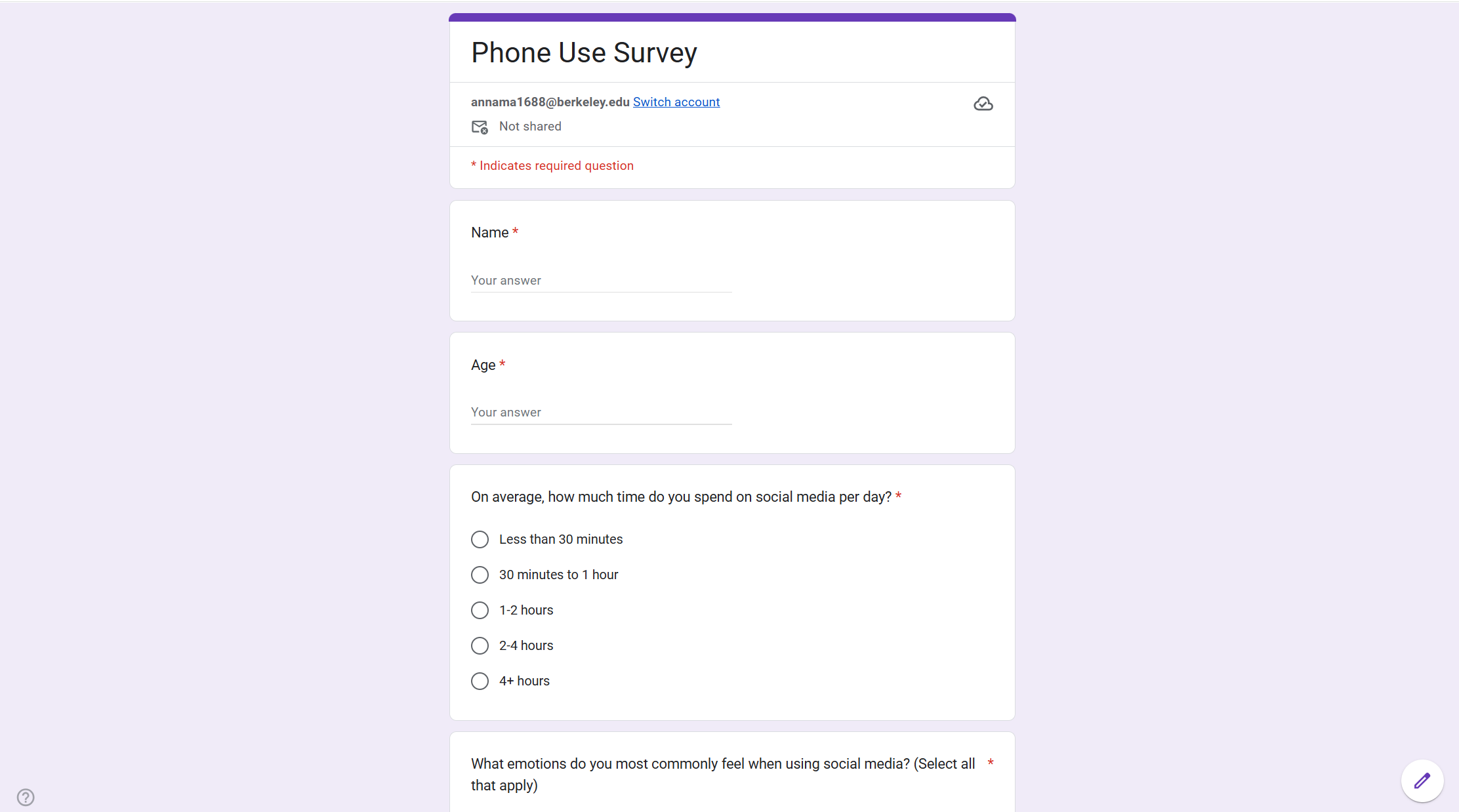
We made a survey for Gen Z aged 18-24 asking about their phone usage habits, the emotions they felt, and how their habits have affected their social connectedness, academics/work, personal health. This was to understand users from analyzing their own stats and words.
We were able to reach 24 users through survey.
Interviews
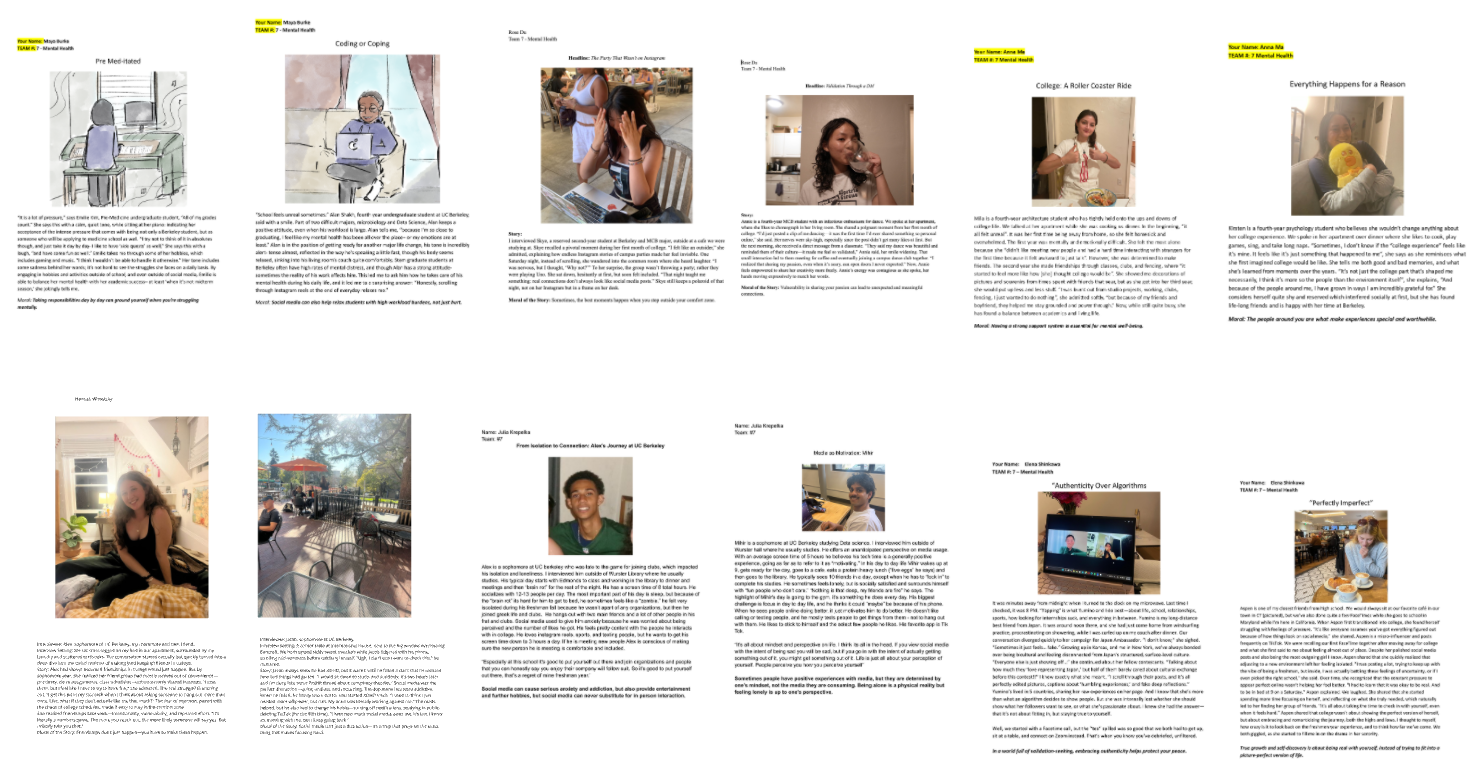
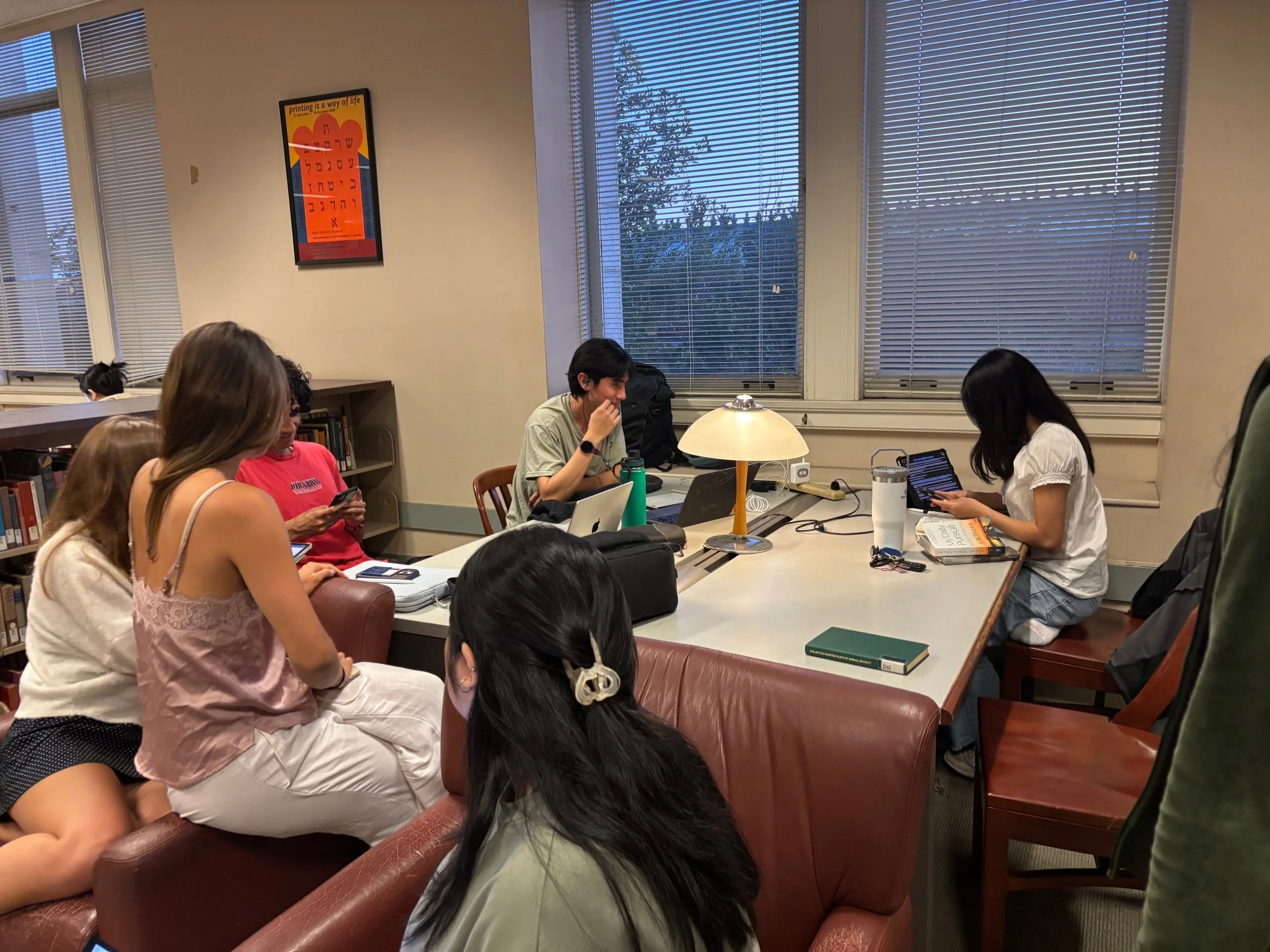
From the 24 participants of our survey, we wanted to dive further into their thoughts and experiences. We were able to interview 12 people about their ability to balance academics/work with life, their relationship with their phone, their social life, and how it has impacted their mental health.
Research Insights
We found that college students are trying their best to balance their lives managing the learning curves of adulthood from every angle, but friendship and support networks are what keep them grounded.
People known that too much phone use leads to interrupted sleep, focus, and in-person socialization, but they still felt anxious and FOMO when not scrolling.
It is a form of disconnect from relationships that already existed without needed effort, and it is easily accessible distractions and dopamine.
However, this doesn’t disregard the positives such as entertainment, inspiration, and yes connection.
Pain Point #1
Excessive phone usage creates a cycle of dependence and shame.
“[Phones] can cause anxiety and stress and entertainment or hobbies, but it can never substitute for in person interaction.”
“Positive or negative experiences are determined by one’s mindset, but just what they consume.”
The strategy for the screen time option in settings is to full stop, which creates a sudden drop in dopamine and leads people to feel frustrated.
Other options are for parents controlling kids, screen time/app tracking, blocking apps, making it harder to access apps, but all of these are overtly controlling.
Some feel the want to keep scrolling out of spite, and again this sudden drop in dopamine leaves people feeling negative rather than encouraged for following through on good habits.
Pain Point #2
Existing screen time control options feel punitive or isolating, not encouraging.
“Whenever my screen limit comes on, I feel like.. ‘ugh’ and I want to just ignore it or like I think ‘I’m just going to finish this one last video’, and fall back into scrolling.”
There are apps that have accountability features such as passcodes or approval notifications for parents or friends. While this may be a short-term solution for kids, this is not practical for adults trying to build better habits.
The features need someone else to give you access, and that is still overtly controlling, isolating, punishing. Waiting for permission does not improve one’s own ability to be disciplined and accountable.
Pain Point #3
Lack of accountability makes it hard to stick to habits.
"I know I have a habit of ignoring screen limits, but because it’s so easy to keep scrolling. I need some spike of panic or anxiety to really push me out of the cycle.”
Synthesis
Now, we better understand the struggles of college students trying to regain control over their phone.
How might we create a tool that encourages people to break out of phone addiction and holds them accountable to stick to new habits?
So, our question becomes…
Ideate
(Positive) Peer Pressure.
After ideating for some time, we realized our solution would need to try something different from traditional concepts. Of course, changing habits includes both intrinsic and extrinsic motivation, but what if we could tie internal and external motivators together to amplify each other?
External motivation from the peer pressure holds people accountable, and internal motivation to not disappoint and to compete with your peers keep people going with their journey.
Features.
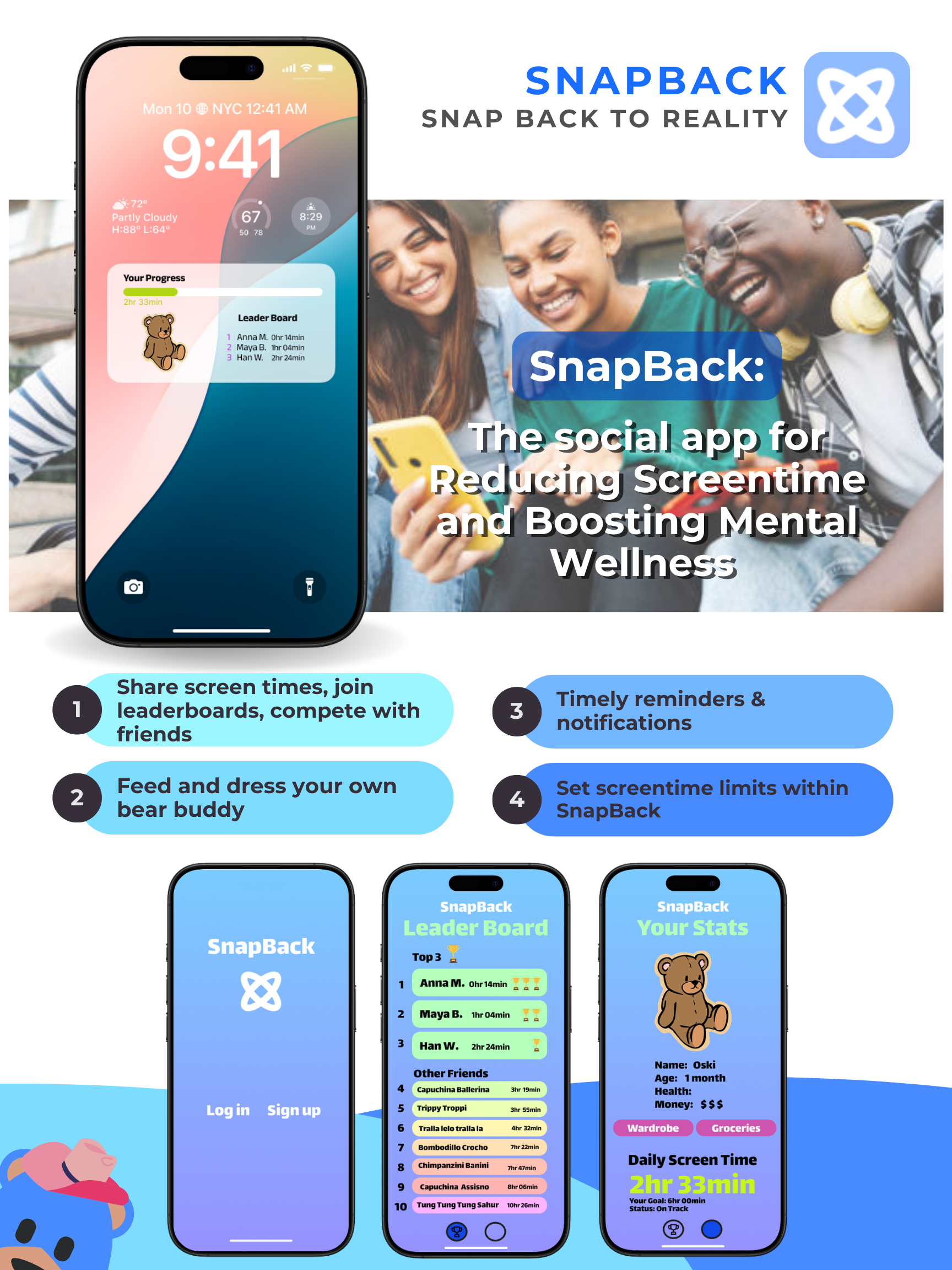
Social Competition. Share and compare screen time with friends, join leaderboards, and celebrate wins. View your personal stats and reflect on how you’re doing.
Pet friend. An optional motivator would be to have a “pet” that you can take care of. One would earn materials to feed or dress up their “pet” by being higher on weekly rankings.
Boundaries. You can opt-in which apps count towards productivity, or temporarily restrict access with self-set limits after a set amount of time.
Notifications. Timely notes when you’ve reached thresholds then sharing those with friends and sending encouragements or break reminders to motivate. You can also send messages to friends letting them know to relax or get back to work.
This mild competition makes for accountability and a feeling of group belonging and built to be a community, rather than isolating nor punitive. There is also a redirection of FOMO while some offering some reward of “winning”.